Created for a Purpose Embroidery Design
A Designer’s First Look: Warm, Grounded, and Thoughtfully Composed
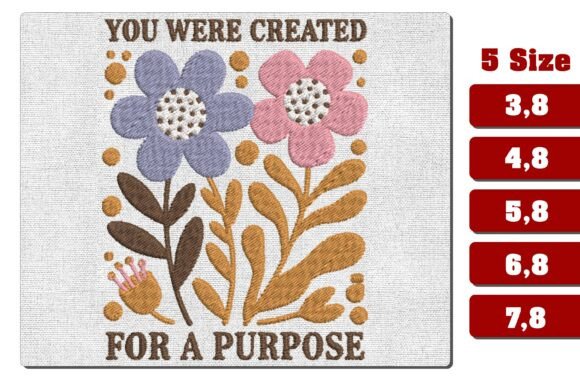
When I opened Created for a Purpose Embroidery Design, I didn’t see just another Thanksgiving-themed machine embroidery design—I saw intention. The layout balances simplicity and meaning: clean lines, open negative space, and a central motif that reads clearly at a glance but rewards closer inspection. It’s not overly ornate, which is refreshing in holiday embroidery where clutter can drown out sincerity. As a designer who regularly selects embroidery files for client projects—custom sweatshirts for local cafés, baby onesies for boutique pre-orders, and linen tea towels for craft fairs—I immediately pictured this stitched on natural cotton canvas or mid-weight terry cloth. It feels like something you’d want to hold, not just hang.
Real-World Use: From Tote Bag to Nursery Pillow
Last week, I prepped a small batch of personalized tote bags for a community harvest event—each with a different embroidery design. I chose the 5.8-inch size of Created for a Purpose Embroidery Design for the main panel. Why? Because it scaled beautifully without overwhelming the fabric’s drape, and the stitch density held up across three different fabric types: unbleached canvas, brushed cotton twill, and a lightweight denim blend. On the canvas tote, the satin stitch elements stayed crisp; on the twill, the fill stitch settled smoothly without puckering. Even on the denim, with light tear-away stabilizer underneath, the design retained its warmth and legibility.
I also tested it on a soft organic cotton pillow cover destined for a nursery. The 4.8-inch version worked perfectly centered above the seam—neither too dominant nor too timid. Customers consistently tell me they notice when embroidery feels *considered*, not just applied—and this design delivers that quiet confidence. It doesn’t shout “Thanksgiving!”; it whispers gratitude, presence, and care. That nuance matters for handmade product appeal, especially for Etsy sellers curating intentional, non-seasonal-feeling holiday items.
Where It Shines—and Where to Pause
Created for a Purpose Embroidery Design performs strongly on stable, medium-weight fabrics: sweatshirt fleece, quilting cotton, linen blends, and structured aprons. It’s an excellent choice for custom apparel, embroidered patches (especially when fused onto denim jackets), and kitchen textiles like tea towels and oven mitts. For small shop owners building cohesive branding, it layers well with minimalist typography or subtle tonal thread palettes—think oatmeal thread on ivory linen, or deep burgundy on charcoal grey.
That said, I recommend caution on highly textured or stretchy fabrics without proper stabilization. On ribbed knit baby onesies, I used the 3.8-inch size and added cutaway + topping—and even then, I reduced stitch density slightly in my editing software to avoid stiffness. Tiny corners and fine interior details (like delicate leaf veins or thin stems) can blur on dark, napped fabrics unless you test thread contrast first. And while the design fits comfortably in standard 5x7 hoops at smaller sizes, the 7.8-inch version will require a larger hoop—so double-check your machine’s capacity before stitching on caps or curved surfaces.
Practical Notes Every Embroiderer Should Keep Handy
- Always stitch a test on scrap fabric—especially if using textured, dark, or stretchy materials.
- Review stitch density before running full production. High-density areas may need reduced tension or lighter stabilizer on delicate items.
- Confirm hoop size compatibility for your chosen dimension—sizes range from 3.8 in to 7.8 in, so match carefully to your project’s real estate.
- Inspect small details at actual stitch-out size—not just on screen. What looks crisp in a digital preview may soften in thread.
- Test black-and-white mockups to assess contrast and silhouette clarity before committing to final thread colors.
- Use appropriate stabilizer: light cutaway for knits, tear-away for stable wovens, and topping for napped or fuzzy surfaces.
- Verify licensing terms before selling finished products or bundling the embroidery file as part of a digital product. Commercial use isn’t automatic—even for holiday embroidery.
Why This Design Builds Trust—Not Just Decoration
In my work with small creative businesses, I’ve watched how one well-chosen embroidery file can elevate perceived value. Created for a Purpose Embroidery Design does that quietly but effectively. It avoids trend-chasing clichés, so it won’t feel dated next November. Its balanced proportions and thoughtful spacing translate into professional-looking finished products—whether it’s a personalized gift for a teacher, a limited-run boutique apron, or a set of holiday kitchen linens for an Etsy shop. Customers respond to authenticity in handmade product presentation, and this design supports that. It doesn’t distract; it affirms. That builds trust—not just in the item, but in the maker behind it.
Fitting Into Your Creative Workflow
If you’re an embroidery designer sourcing reliable assets, this is a versatile addition to your library—not because it’s flashy, but because it’s dependable. It works equally well as a standalone focal point or as part of a coordinated collection (think coordinating napkins, coasters, and oven mitts). For digital product sellers, it’s a strong candidate for printable mockup bundles—its clean shape renders beautifully in lifestyle scenes. And for craft fair vendors or small shop owners, it’s a low-risk, high-return embroidery file: easy to explain, easy to love, and easy to justify at a premium price point when stitched thoughtfully.
Ultimately, Created for a Purpose Embroidery Design earns its name—not just as a Thanksgiving embroidery file, but as a design that serves a real function in real projects. It’s the kind of embroidery file I keep bookmarked for last-minute client requests, seasonal collections, and those moments when I need something that says more than decoration. It says intention. And in today’s handmade market, that’s worth every stitch.