Love Birds Embroidery Design with Flower
A Designer’s First Impression: Delicate, Intimate, and Quietly Confident
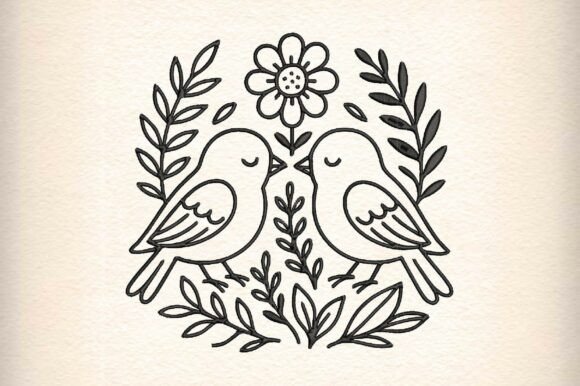
When I opened Love Birds Embroidery Design with Flower, I didn’t just see a pair of birds—I felt the intention behind it. Two small, gently curved birds face each other mid-stem, wings slightly relaxed, beaks nearly touching. Around them, soft floral loops unfurl—not fussy or overwhelming, but like a quiet sigh of growth. This isn’t a bold statement piece; it’s a whisper of connection. It reads as handmade, tender, and intentional—ideal for projects where emotional resonance matters more than visual volume.
Where It Lives Best: Real Projects That Breathe With This Design
Last week, I stitched Love Birds Embroidery Design with Flower onto a natural linen tote bag for a local boutique’s spring collection. The result? Instant warmth. Customers paused, smiled, asked about the story behind it. That tells me something important: this design doesn’t just decorate—it invites conversation. It works beautifully on baby onesies (paired with pale pink thread), kitchen tea towels (where the floral flow echoes herb motifs), and pillow covers for nursery or bedroom decor. I also tested it on a lightweight cotton sweatshirt—no puckering, no distortion—and the birds retained their gentle roundness even after washing.
For Etsy sellers and craft fair vendors, this is a quiet workhorse. It fits naturally into collections centered on love, nature, motherhood, or seasonal gifting (think Valentine’s Day, weddings, or baby showers). As a machine embroidery design, it balances detail and manageability—enough intricacy to feel special, but not so dense that it overwhelms lightweight fabrics or stresses home embroidery machines.
Where to Proceed With Care
- Small hoop sizes: The full composition—including outer florals—needs breathing room. If you’re stitching on a cap or narrow cuff, consider using just the bird pair without the outer blooms, or confirm the design includes a simplified version.
- Textured or stretchy fabrics: On terry cloth towels or ribbed knit caps, stitch density matters. Test first with medium-weight cutaway stabilizer—especially under the birds’ heads and flower centers, where satin stitch detail can blur if unsupported.
- Dark or heavily printed backgrounds: The design relies on subtle contouring. On black fabric, use high-contrast thread (ivory or soft gold) and avoid overly dense fill stitch areas that may flatten the delicate lines.
- Frequent-wash items: While the layout avoids ultra-fine stems or micro-details that fray easily, always reinforce with tear-away + cutaway combo stabilizer for baby clothes or kitchen linens.
What It Adds to Your Finished Product—Beyond Aesthetics
This isn’t just another embroidery file—it quietly elevates perceived value. When customers see Love Birds Embroidery Design with Flower on a personalized gift, they register care: in the curve of a wing, the spacing between petals, the balance of negative space. That translates directly to trust. For small shop owners, that means fewer returns, more repeat buyers, and stronger brand consistency—especially if you use it across a cohesive line (e.g., matching pillow + towel + apron sets).
I’ve used it in digital embroidery file previews for client proposals—and every time, it reads as professional, not generic. Unlike over-saturated floral clusters or cartoonish bird motifs, this one feels curated. It supports your voice as a designer rather than competing with it.
Practical Notes Every Embroidery Designer Should Run Through
- Always test on scrap fabric first—especially if pairing with textured weaves or blends. Note how the floral loops settle; some stabilizers lift delicate fill stitches if not balanced right.
- Check thread color contrast early. Soft peach thread on cream linen? Lovely. Same thread on oatmeal canvas? May disappear. Try grayscale mockups before finalizing.
- Review stitch density in the bird eyes and petal tips. Overly tight satin stitch there can cause thread breakage or stiffness—look for smooth transitions, not rigid edges.
- Confirm hoop size compatibility before prepping production runs. Some versions of this design may include multiple hoop options; others assume a standard 4x4 or 5x7.
- Inspect small details at actual stitch-out scale. Zoom in on your embroidery software: are the birds’ feet cleanly defined? Do floral tendrils taper naturally, or end abruptly?
- Test both light and dark fabric backgrounds using printable mockups—this helps anticipate how customers will photograph your finished product.
- Use proper stabilizer for your base fabric—lightweight cutaway for knits, medium tear-away for stable wovens, and fused + cutaway for layered garments like reversible aprons.
- Verify licensing terms before selling finished items or bundling the embroidery file as part of a digital product. Not all Birds-themed embroidery files permit commercial embroidery or resale of stitched goods without attribution or limits.
Final Thought: A Design That Serves Its Purpose—Quietly, Honestly, Well
Love Birds Embroidery Design with Flower won’t shout from a shelf—but it will make someone pause, touch the fabric, and say, “I need this.” That’s the mark of thoughtful design. It’s not flashy, but it’s reliable. Not trendy, but timeless enough for baby embroidery today and wedding gifts five years from now. Whether you’re an Etsy seller building a signature style, a boutique owner curating meaningful merchandise, or a craftsperson stitching heartfelt personalized gifts, this embroidery design earns its place—not because it’s perfect, but because it’s purposeful. And in real-world embroidery work, that’s what lasts.