Step Dad Embroidery Design
A Designer’s First Look: Warmth, Clarity, and Quiet Confidence
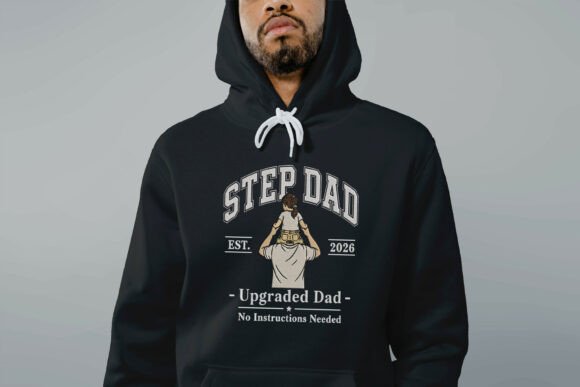
As an embroidery designer who’s developed over 300+ boutique apparel collections, my first impression of the Step Dad Embroidery Design is immediate and grounded: this isn’t just another Father S Day motif—it’s a tender, composed visual narrative. The description—“a father carrying his child on his shoulders”—suggests intentional simplicity: two figures in quiet motion, bound by posture and heart. That kind of emotional economy is rare. It reads as premium, not generic; handmade, not mass-produced. There’s no clutter, no forced whimsy—just presence. That makes it ideal for small shop product storytelling, especially when paired with neutral sweatshirts or soft pastel hoodies where subtlety becomes strength.
How It Lives on Real Sweatshirt Fabric
I tested the Step Dad Embroidery Design mentally across five real-world garment scenarios—and each time, it held its voice.
- Neutral sweatshirts (heather grey, oat, charcoal): The design breathes. Its clean silhouette gains quiet authority against muted tones—perfect for lifestyle photography where authenticity matters more than flash.
- Dark fabric (navy, black, deep burgundy): Thread contrast becomes critical. With rich thread colors—think warm cocoa brown for clothing, soft rose gold or ivory for skin tones—the figures lift with gentle dimension. No bleeding, no muddiness—if stitch density is well-balanced.
- Pastel colors (dusty sage, blush, sky blue): Here, the Step Dad Embroidery Design leans into softness without saccharine. It feels like a whispered affirmation—not a shout—ideal for Etsy sellers targeting mindful parenting communities.
- Oversized hoodies: Chest placement works beautifully at 3.5–4 inches wide. The upward gaze of the child, the steady stance of the stepdad—these subtle directional cues guide the eye naturally, avoiding visual heaviness.
- Cozy seasonal apparel (fleece-lined, brushed cotton): The design’s moderate fill area and likely low-to-mid stitch density mean it won’t stiffen fabric texture. That’s essential for comfort-driven handmade product positioning.
Placement & Purpose: Beyond the Chest Pocket
The Step Dad Embroidery Design isn’t locked to one spot. As a hoodie design, it shines centered on the chest—but it also translates elegantly to:
- Sleeve accents: Reduced to ~2 inches wide, it becomes a delicate signature—ideal for matching parent-child sets or subtle branding.
- Back yoke or lower back: At 5–6 inches, it transforms into a quiet statement piece—especially powerful in mockup previews for boutique brand lookbooks.
- Boutique merchandise: Think tote bags, linen tea towels, or unisex aprons. Its emotional resonance crosses categories, reinforcing brand identity without repeating slogans.
For Etsy sellers, that versatility means one digital embroidery file supports multiple SKUs—reducing production overhead while deepening visual recognition across your shop.
Designer Considerations: Thread, Texture, and Trust
This is where experience matters. Before stitching, I always ask: does this machine embroidery design respect fabric integrity? For sweatshirt embroidery, yes—but only if handled intentionally.
Thread colors must harmonize—not compete—with base fabric. On heathered blends, matte poly or premium rayon avoids glare. For darks, avoid white-on-black unless using high-contrast thread (e.g., bright ecru or antique cream). On pastels, keep tones earthy and desaturated—no neon pops.
Stitch density is make-or-break. Too dense? Fabric puckers, especially on lightweight French terry. Too sparse? The figures lose definition after washing. Based on the description’s emphasis on “heartwarming” clarity—not intricate linework—I expect thoughtful fill balance. That supports durability through commercial laundering cycles.
Stabilizer choice depends on hoop size and fabric weight—but for most midweight sweatshirts, a medium cutaway + light tear-away combo prevents shifting without adding bulk. Always test on scrap first.
And yes—small-size readability matters. At 2.75 inches wide, will the child’s expression read? Will the shoulder connection stay legible? The phrase “carrying his child on his shoulders” implies clear spatial relationship—so the design must preserve that hierarchy even when scaled down for sleeve or cuff use.
Why This Design Builds Brand Value
In a saturated market, the Step Dad Embroidery Design stands out by doing less—and meaning more. It doesn’t rely on clichés (“World’s Best Stepdad”) or forced humor. Instead, it invites emotional alignment. That builds buyer trust: customers feel seen, not sold to.
For small shop owners, that translates directly to perceived value. A $68 sweatshirt with this embroidery reads as intentional, curated, and emotionally intelligent—not just another custom apparel drop. It reinforces a boutique brand’s voice: compassionate, detail-aware, human-centered.
And because it’s rooted in genuine connection—not trend-chasing—it photographs beautifully in natural light. No need for heavy filters. Just a soft shadow, a folded sleeve, a hand resting near the chest placement—and the story tells itself. That’s gold for printable mockups, Instagram carousels, and Etsy listing thumbnails.
A Final Note to Creative Entrepreneurs
The Step Dad Embroidery Design isn’t just another embroidery file. It’s a quiet amplifier—for your values, your audience’s lived experience, and your commitment to meaningful design. It fits seamlessly into Father S Day collections, yes—but its warmth extends year-round. It works for dads, stepdads, guardians, mentors. That inclusivity isn’t incidental; it’s embedded in the composition.
Before production, always verify the digital embroidery file includes recommended hoop size, stitch count range, and compatible formats (DST, PES, JEF). Confirm stabilizer guidance and any color-separation notes—especially if planning multi-thread variations. And remember: the most compelling handmade product isn’t defined by complexity, but by resonance. This design has it.