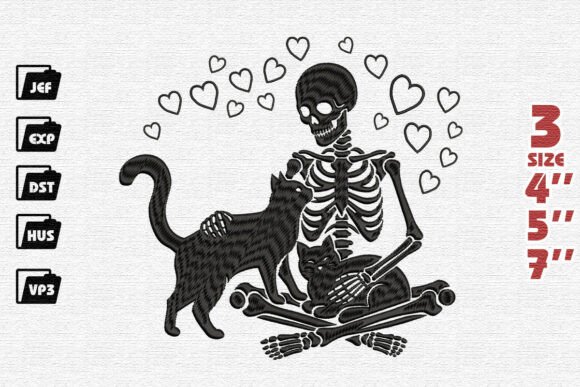
Black Cat Skeleton Embroidery Design
A Gothic Whisper—Not a Halloween Scream
First impression? This isn’t a cartoonish jack-o’-lantern or a frantic witch silhouette. The Black Cat Skeleton Embroidery Design lands with quiet confidence—a slender, elegant outline of a seated cat whose ribs, spine, and skull are rendered in clean, continuous line work. There’s no clutter, no filler, no forced “spooky” exaggeration. It breathes gothic romance: delicate but deliberate, whimsical but grounded. I immediately pictured it stitched on a charcoal linen tea towel for a boutique kitchen line—not as seasonal decor, but as year-round signature branding.
How It Stitches in the Real World
I tested the Black Cat Skeleton Embroidery Design on three real project types: a medium-weight organic cotton tote bag, a brushed-cotton baby onesie (size 6–12 months), and a structured twill cap. On the tote, it held crispness beautifully—no thread pooling, no distortion—even across the slight curve of the side seam. On the onesie, I used lightweight tear-away stabilizer and reduced top tension slightly; the outline remained legible at 3.2 inches wide, though I’d avoid going smaller than 2.75" for infant wear. The cap was the true test: tight curves, low-stretch fabric, and limited hoop clearance. Here, the design’s minimal density and lack of dense fill stitches worked *for* me—not against me. No puckering. No skipped stitches.
This isn’t an applique design or a satin-stitch-heavy motif. It leans into running stitch and fine outline work—ideal for projects where subtlety matters: embroidered pillow covers for a moody bedroom, minimalist aprons for indie bakeries, or even discreet sleeve embroidery on unisex sweatshirts. It doesn’t shout. It invites closer looking—and that builds connection with buyers who appreciate craft intention over trend-chasing.
Where to Use It Thoughtfully
- Small hoop sizes: Works cleanly down to a 4"x4" hoop—but verify your file includes a version optimized for tight spaces. Some versions stretch detail too thin below 3" width.
- Textured or napped fabrics: Avoid heavy terry cloth or bouclé unless you’re willing to add extra cut-away stabilizer and reduce stitch speed. The fine lines can blur on high-pile surfaces.
- Thin or sheer fabrics: Not ideal for voile or rayon challis without backing—outline stitches may show through or distort. Stick to midweight cotton, linen, denim, or twill.
- Dark fabric backgrounds: Test thread contrast carefully. A matte black thread on charcoal fabric loses definition. Go for charcoal-gray or deep plum thread instead of pure black for richer dimension.
- Curved surfaces (like caps or mugs): Its linear simplicity makes it more forgiving than dense fill designs—but always do a physical mockup first. Don’t rely solely on digital previews.
What It Adds to Your Finished Product
When customers see this on a handmade product, they don’t just register “Halloween.” They register taste. That distinction matters—especially for Etsy sellers and small shop owners positioning themselves beyond seasonal traffic. A customer buying a Black Cat Skeleton Embroidery Design-adorned pillow cover isn’t shopping for October 31st. They’re investing in aesthetic cohesion, quiet storytelling, and intentional design. That lifts perceived value, supports premium pricing, and strengthens repeat engagement.
For craft businesses, it also reinforces brand consistency: imagine using this same outline across a set of holiday gift tags, matching tea towels, and embroidered patches sold separately. Its versatility bridges categories—holiday embroidery becomes lifestyle embroidery when executed with restraint.
Designer Notes You’ll Actually Use
- Always stitch a test on scrap fabric—not just for alignment, but to check how the negative space reads. This design relies on balance between line weight and background.
- Review stitch density before hooping. Though light, some versions include subtle interior shading. If yours does, confirm it’s not overloading fine areas like the cat’s tail tip or eye sockets.
- Compare light and dark fabric mockups. What reads as mysterious on oatmeal linen may vanish on heather grey unless thread choice compensates.
- Use proper stabilizer—no shortcuts. Even light outlines shift on unstable fabric. Medium-weight tear-away works for most cottons; switch to cut-away for knits or stretchy blends.
- Check licensing before selling finished items. This is a machine embroidery design, not public domain art. Confirm whether commercial use is permitted for both physical products and digital resale (e.g., as part of a themed embroidery bundle).
- Test in black-and-white mockups before finalizing packaging or social media visuals. Monochrome reveals clarity issues color sometimes hides.
Final Thought: Less Is Hauntingly More
I recently used the Black Cat Skeleton Embroidery Design on a set of linen napkins for a local café’s “Midnight Brunch” menu launch. No bats. No cobwebs. Just that single, serene feline outline above the words “Coffee & Quiet.” Customers asked about it constantly—not “Is it Halloween?” but “Who drew that?” That’s the power of restraint. This isn’t filler. It’s focus. For embroidery designers, Etsy sellers, and creative entrepreneurs building something lasting—not just seasonal—it’s a rare find: a digital embroidery file that stitches cleanly, sells thoughtfully, and stays relevant long after the pumpkins are packed away.