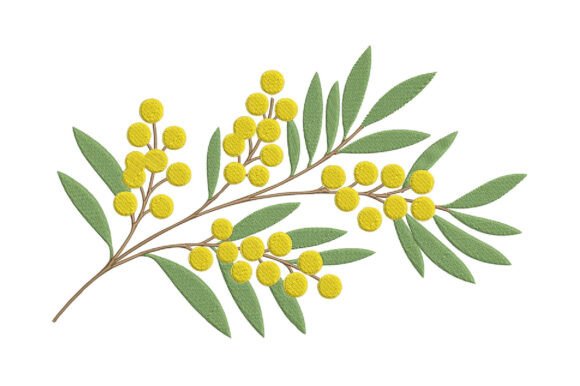
Botanical Branch Embroidery Design
A Designer’s First Glance: Elegant, Natural, and Instantly Recognizable
As someone who’s stitched hundreds of designs for craft fairs and handmade markets, my first impression of the Botanical Branch Embroidery Design is clear: it reads as elegant and natural—not fussy, not overly trendy, but quietly confident. That “long leafy branch with delicate yellow berry-style flowers” delivers immediate botanical charm without leaning into cliché farmhouse or overdone boho. It feels premium at a glance—exactly what draws customers to a booth full of handmade goods. In a sea of florals, this design stands apart because it’s linear, not clustered—it flows, it breathes, and it invites the eye to follow its gentle curve.
Where It Shines: Craft Fair Product Pairings That Sell
This isn’t a one-size-fits-all embroidery file. Its strength lies in intentional placement—and that’s where your judgment as a maker matters most.
- Tote bag design: Perfect as a vertical accent along the side seam or centered low on the front panel. The length of the branch creates movement and scale without overwhelming the fabric.
- Apron embroidery: Ideal above the pocket or sweeping diagonally across the bib—adds artisanal polish without competing with function.
- Tea towel embroidery: Works beautifully in the lower corner or centered mid-panel. On linen or cotton toweling, the yellow berries pop against natural or muted backgrounds.
- Embroidered patch: Highly effective when finished with a clean merrowed or satin-stitched edge. Small shop product buyers love patches for jackets, bags, and kids’ gear—and this design translates well at 3–4 inches wide.
- Pillow cover & pouch embroidery: Scales down gracefully for 5"–7" formats. The branch’s rhythm keeps it legible even at smaller sizes, unlike dense bouquet-style motifs that blur.
It’s less ideal for curved cap surfaces (the linear flow fights the dome) or tiny keychain tags—those demand tighter, more compact machine embroidery design logic. But as a craft fair product centerpiece? Absolutely.
Photography, Listings, and Online Appeal
The Botanical Branch Embroidery Design photographs exceptionally well—especially on light, textured fabrics like unbleached canvas or oatmeal linen. Its clean silhouette renders sharply in natural light, making it a standout in printable mockups and Etsy listings. Unlike intricate filler-heavy designs, this one doesn’t require heavy editing to read online. That means faster listing prep, stronger visual consistency across your shop, and higher perceived value in thumbnail view.
For Etsy sellers and digital sellers: pair it with cohesive design assets—think matching tea towel + pouch + patch bundles. Customers respond to curated collections, and this embroidery file anchors them naturally within the Bouquets category while feeling distinct from typical round floral arrangements.
Production Reality Check: What Makes This Design Batch-Friendly
From a production standpoint, the Botanical Branch Embroidery Design is refreshingly practical. Its moderate stitch density avoids excessive thread consumption or hooping fatigue. No tiny lettering, no micro-details that vanish on textured towels or thick denim. That means fewer re-hoops, fewer thread breaks, and smoother transitions between fabric types—from lightweight chambray to medium-weight canvas.
That said: always test the design on scrap fabric before committing to 50 tote bags. Pay close attention to how the yellow berry elements hold up on dark fabric—low-contrast thread can mute their delicacy. And if you’re stitching on terry cloth or heavily textured tea towels, use a cutaway stabilizer to prevent puckering and preserve definition in the leaf veins.
Booth Impact & Buyer Engagement
In person, this design performs like a quiet magnet. At a crowded craft fair, customers pause for elegance—not noise. The branch’s organic asymmetry feels handmade, not digitized; its balance of negative space and detail signals craftsmanship. When displayed across multiple products—a folded tea towel, an apron draped over a stool, a patch pinned to a denim jacket—it builds brand consistency without repetition. Shoppers begin to recognize your aesthetic, not just your logo.
And because it’s versatile across genders and age groups (unlike novelty or seasonal motifs), it broadens your appeal without diluting your voice. That’s rare in small shop product development.
Careful-Use Notes Every Embroidery Designer Should Know
Even elegant designs have limits. Here’s what to watch for with the Botanical Branch Embroidery Design:
- Avoid scaling below 2.5 inches wide—the yellow berry elements may lose clarity.
- On dark fabric, confirm thread contrast: soft yellow may need a slightly brighter tone for visibility.
- Don’t skip stabilizer testing—especially for high-thread-count cottons or loosely woven linens where stitch density can shift.
- Check spacing between branch elements before mass production—tight loops or overlapping stems could snag during wear or washing.
- Confirm hoop size compatibility early. A long, narrow motif may require a larger hoop than expected—or clever repositioning for multi-hooping.
Final Designer Recommendations Before You Launch
Before adding the Botanical Branch Embroidery Design to your next craft fair lineup:
- Stitch a real mockup on your most-used fabric—don’t rely solely on screen previews.
- Compare thread colors across at least three fabric bases (light, medium, dark) to lock in your palette.
- Review the embroidery file for any hidden underlay or jump stitches that might affect clean finishing.
- Verify commercial licensing—this is essential for selling finished products, especially if you plan to offer it as part of a commercial embroidery service or wholesale line.
- Ask yourself: does this design strengthen my booth story? Does it reflect the quality and intention I want customers to associate with my handmade product brand?
When all those align—as they do with the Botanical Branch Embroidery Design—you’re not just selling embroidery. You’re offering a moment of calm, beauty, and quiet confidence. And in a handmade market? That’s the kind of detail that turns browsers into loyal buyers.