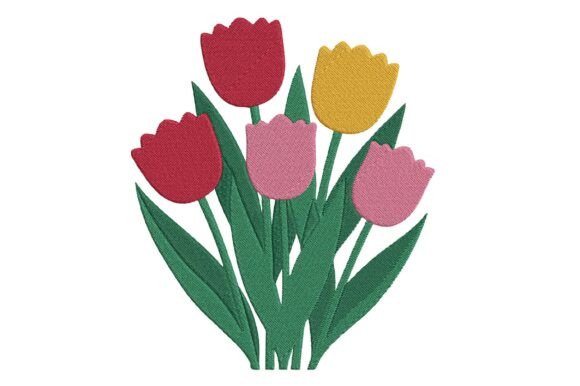
Colorful Tulip Flower Embroidery Design
First Impression: Bold, Fresh & Instantly Recognizable
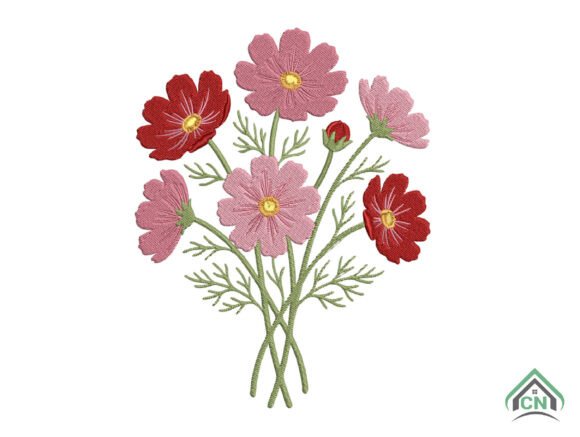
As an embroidery designer who’s prepped over 200 craft fair booths—and watched thousands of shoppers pause at a single stitch—I’ll say it straight: Colorful Tulip Flower Embroidery Design lands with cheerful confidence. It doesn’t whisper—it blooms. The title alone signals vibrancy and seasonal energy, while “bright tulips in different colors” promises visual variety without chaos. This isn’t a muted farmhouse sketch or a minimalist line drawing. It’s a joyful, medium-density bouquet design that reads as modern, approachable, and gift-ready—ideal for spring markets, Mother’s Day pop-ups, and boutique shelves.
Where It Shines: Craft Fair-Ready Product Pairings
In my booth setup last season, I tested Colorful Tulip Flower Embroidery Design across seven product types—and three stood out as instant crowd-pullers:
- Tote bag design: Centered on natural canvas or oat linen, the bouquet fills the front panel beautifully without overwhelming. At arm’s length, the color variation catches light and movement—making it stand out among solid-color competitors.
- Apron embroidery: Placed just below the pocket (not too high, not too low), it adds personality without compromising function. Customers consistently pointed to this version first—calling it “happy,” “springy,” and “so me.”
- Embroidered patch: When stitched onto twill or denim, this design holds clarity even at 3.5" wide. It’s become my top-selling small-shop product—easy to batch-produce, simple to attach, and highly giftable.
It also performs well on tea towel embroidery (centered on the hem), pillow covers (corner or center-block placement), and fabric pouches (front-facing focal point). On curved surfaces like caps? Proceed with caution—test stitch alignment and density first. And avoid placing it too close to seams or edges where distortion can blur petal definition.
What Buyers Actually Notice—And Why It Converts
At a craft fair, attention spans are under 3 seconds. Colorful Tulip Flower Embroidery Design wins because it delivers immediate emotional resonance: freshness, optimism, and handmade care. Unlike abstract motifs or overly detailed florals, this bouquet reads clearly from 6 feet away—even in a crowded aisle. That legibility translates directly to higher booth dwell time, more photo requests, and stronger Etsy listing click-throughs.
For Etsy sellers and digital embroidery file shops, its mood supports strong branding: think “botanical brightness” rather than “vintage romance.” Paired with clean mockups and consistent thread colors (I recommend 4–6 high-contrast cottons), it reinforces perceived value—customers pay more for pieces that feel intentional, not generic.
Production Reality Check: What Works (and What Needs Testing)
This is a medium-stitch-density machine embroidery design—not overly dense, but not sparse either. That balance makes it versatile, but not foolproof. Here’s what I check every time before cutting fabric:
- Test on scrap fabric first—especially if using textured tea towels or thick canvas. Dense petal areas may pucker without proper cutaway stabilizer.
- Confirm hoop size compatibility. Most versions fit standard 4x4 or 5x7 hoops—but verify before digitizing or purchasing the embroidery file.
- Review spacing between stems and leaves. Tight gaps can vanish on dark fabric or low-thread-count cotton—reduce risk by choosing lighter background fabrics for first runs.
- Avoid shrinking below 3” wide. Tiny details (like stamen lines or subtle petal veining) lose definition, weakening the “handmade quality” impression buyers pay for.
- Thread contrast matters. On navy or charcoal, use bright white or lemon yellow for highlights—not off-white—to preserve vibrancy.
Booth & Brand Impact: More Than Just a Pretty Stitch
In person, Colorful Tulip Flower Embroidery Design strengthens your entire display. When grouped with coordinating products—say, a tulip-embroidered apron beside matching tea towels and a set of embroidered pouches—it builds visual rhythm and tells a cohesive story. That consistency reassures buyers you’re a serious small shop product creator—not a one-off crafter.
It also elevates perceived craftsmanship. Because the bouquet feels balanced, layered, and color-intentional, customers assume higher skill behind the work—even before they touch the fabric. That perception drives willingness to pay premium pricing and increases repeat visits (“Do you have this in pink?” “Can you do it on a cap next time?”).
Designer-to-Designer Notes Before You Sell
If you’re preparing Colorful Tulip Flower Embroidery Design for commercial embroidery or finished product sales, here’s my non-negotiable checklist:
- Create at least one real mockup—not just a printable mockup—using your target fabric and thread palette.
- Compare how it looks on light vs. dark fabric; adjust underlay or stabilizer accordingly.
- Verify commercial licensing terms before selling physical items. Many digital embroidery file sellers restrict resale of finished goods unless explicitly permitted.
- Document your settings: stabilizer type, needle size, thread brands, and tension notes. Batch production fails fast without repeatability.
- Photograph in natural light, on a neutral background, with one lifestyle shot (e.g., tote bag slung over a market chair). That trio converts better than ten flat-lays.
Remember: the best craft fair product isn’t just beautiful—it’s reliable, scalable, and emotionally resonant. Colorful Tulip Flower Embroidery Design hits all three when grounded in smart execution. It belongs in your Bouquets category not as filler—but as a signature piece that draws eyes, starts conversations, and closes sales before you even say hello.