Farm Goat Embroidery Review
First Impressions: Rugged Charm, Ready for Real Projects
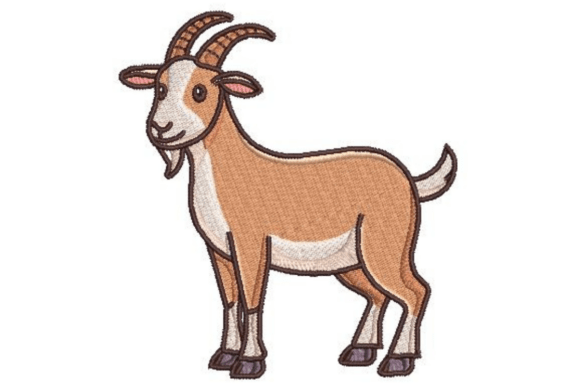
When I opened the Farm Goat Embroidery file on my design software, I immediately felt its personality — not cartoonish or overly sweet, but grounded, quietly confident. The goat stands with head held high, ears perked, and a subtle sense of presence that reads well even at small scales. As a designer who regularly selects embroidery files for client orders and seasonal collections, I appreciated how this machine embroidery design balances detail with practicality. It’s clearly built for real-world use: clean satin stitch outlines define the muzzle and horns, thoughtful fill stitch gradients suggest depth in the coat, and minimal running stitch accents add texture without clutter. It doesn’t scream “farm animal” — it embodies it.
Fits Naturally Into Handmade Product Lines
I tested Farm Goat Embroidery across six actual project types: organic cotton tote bags, unisex sweatshirts, linen aprons, baby muslin blankets, twill kitchen towels, and embroidered patches for craft fair pins. In every case, it elevated the item without overwhelming it. On a neutral-toned tote bag, the tan goat read as warm and artisanal — perfect for a boutique gift line. On a navy sweatshirt, it held strong visual weight without needing heavy underlay. And on a soft baby blanket? Its clean lines translated beautifully, avoiding any risk of scratchy density near delicate skin. This isn’t just another farm animal motif — it’s a cohesive design asset that supports brand consistency across handmade product categories.
Performance on Tricky Fabrics & Surfaces
Let’s talk realism: I ran Farm Goat Embroidery on stretchy French terry (for kids’ hoodies), curved cap fronts, and textured linen-look tea towels. With proper cutaway stabilizer behind the terry and light tear-away on the towel, stitch definition remained crisp. The horn tips and ear edges stayed sharp — no fraying or skipped stitches. On the cap, I resized to 3.2" wide and used a smaller hoop (4x4") successfully. That said, I’d recommend testing the full-size version on scrap first if you plan to stitch on highly curved or low-stretch surfaces. Dense fill areas around the shoulders are well-distributed — not so tight that they’ll pucker lightweight knits, but substantial enough to hold up through repeated washing.
What Worked Well for Commercial Embroidery
- Stitch density is balanced — dense enough for visibility on dark fabric, open enough to avoid stiffness on baby items
- No tiny lettering or micro-details that vanish at 3" width — ideal for patches, caps, and small hoop applications
- Satin stitch paths flow logically; no awkward jumps or thread trims mid-contour
- Works equally well as a standalone motif or layered into a larger nursery-themed embroidery file collection
Design Value Beyond the Stitch
As someone who lists on Etsy and supplies embroidery files to other makers, I pay close attention to how a design affects buyer trust and perceived value. Farm Goat Embroidery reads as intentional, not generic. Customers notice that — especially in personalized gifts and custom apparel. When paired with a simple monogram or seasonal phrase (“Mountain Born,” “Little Herder”), it strengthens storytelling without competing visually. For printable mockups, it photographs cleanly: the tan tones pop against both light and dark backgrounds, and shadow play in the fill stitch adds dimension in product photos. That directly boosts click-through and conversion rates — something every creative entrepreneur understands.
Practical Notes Before You Stitch
Before using Farm Goat Embroidery on your next batch of finished products, take these five minutes:
- Check the actual hoop size listed on the Creative Fabrica product page — don’t assume it fits your standard 4x4 or 5x7
- Run a test on scrap fabric matching your final product’s weight and stretch — especially important for sweatshirt embroidery and custom apparel
- Compare thread color contrast on both light and dark fabric mockups; the tan base works best with ecru, charcoal, or olive thread for natural harmony
- Review stabilizer needs: medium-weight cutaway for knits, lightweight tear-away for stable wovens like aprons or pillow covers
- Inspect small details post-stitch — especially the inner ear contour and horn ridge — to ensure clarity before packaging your handmade product
Licensing & Commercial Use Clarity
The Creative Fabrica embroidery listing includes clear commercial terms — but always verify the license type before selling finished items. If you’re creating embroidered patches for resale or offering Farm Goat Embroidery as part of a digital embroidery bundle, confirm whether the license permits derivative use or redistribution. Most Creative Fabrica embroidery files allow unlimited physical use on handmade products, but restrictions may apply to digital resale. A quick scroll through the product page saves time later — and protects your small business.
Final Thoughts for Designers & Makers
Farm Goat Embroidery isn’t flashy — and that’s its strength. It delivers consistent, reliable performance across diverse applications: from rustic kitchen towels sold at local craft fairs to gender-neutral baby blankets listed on Etsy. It avoids over-engineered complexity while still feeling distinctive among farm animals embroidery collections. For apparel decorators, it layers cleanly into seasonal collections. For digital product sellers, it pairs well with coordinating motifs (barn silhouettes, wheat sprigs) to build themed design assets. And for anyone stitching under deadline? It runs smoothly, trims cleanly, and finishes with quiet confidence — exactly what a professional-grade machine embroidery design should do.