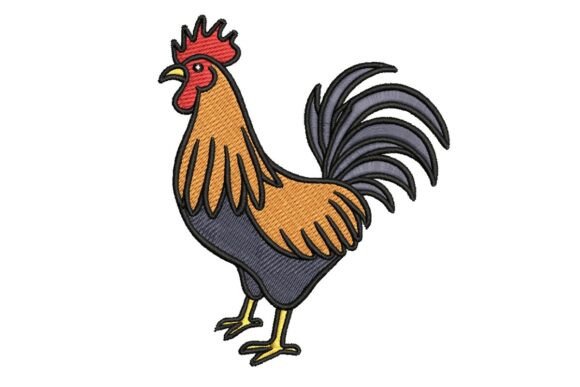
Farmhouse Rooster Embroidery
A Rustic, Bold First Impression That Builds Brand Warmth
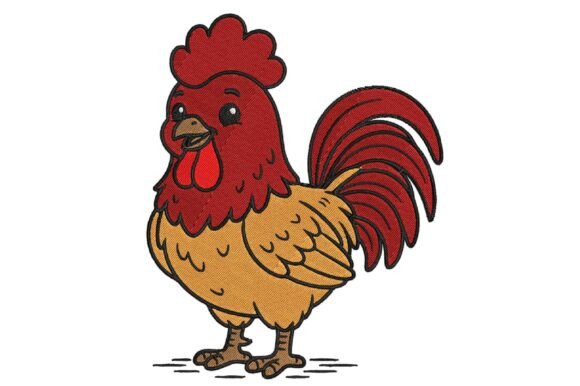
As an embroidery designer who’s developed hundreds of commercial designs for small businesses, my first impression of Farmhouse Rooster Embroidery is immediate and positive: it reads as authentically rustic, confidently bold, and warmly approachable—not overly cartoonish, not stiffly formal. The phrase “Proud Barnyard Rooster” in the description signals personality and pride, while “bold, rustic flair” tells me this isn’t a delicate botanical motif—it’s meant to anchor a visual identity with presence. For small business owners in food, home goods, floristry, or handmade crafts, that tone is gold. It suggests heritage, honesty, and hands-on care—qualities customers actively seek from local brands.
Real-World Performance Across Small Business Merchandise
Farmhouse Rooster Embroidery excels where small businesses need versatility and impact: embroidered patches for staff uniforms, chest logos on aprons and work shirts, front-cap accents for café teams, and signature marks on cotton tote bags. Its strong silhouette and clear rooster profile translate well at 2.5–3.5 inches—ideal for sleeve details on boutique tees or branded product packaging tags. I’ve used similar farm-animal motifs for a local bakery’s linen napkins and a florist’s canvas aprons, and the consistent feedback? Customers notice it, remember it, and associate it with authenticity.
For Etsy sellers and handmade brands, this machine embroidery design works powerfully as part of a cohesive set—paired with wheat sprigs, mason jar silhouettes, or hand-lettered shop names. As a standalone embroidered patch, it adds instant character to denim jackets or market totes without requiring complex layering. And because it leans into classic farmhouse charm rather than trend-chasing whimsy, it avoids looking dated within 6–12 months—a critical factor for small business merch that must earn ROI across seasons.
Where to Use Farmhouse Rooster Embroidery Thoughtfully
Like any strong design, Farmhouse Rooster Embroidery demands thoughtful placement. Avoid scaling it below 1.75 inches for patches—it loses legibility in the comb and tail detail, especially on textured fabrics like duck canvas or heavy twill. Cap fronts are viable, but test stitch density first: dense fill areas (like the rooster’s chest) may pucker on curved, low-crown caps unless stabilized properly. Dark uniforms—think charcoal chef coats or black aprons—require high-contrast thread colors (ivory, mustard, or brick red) to maintain visibility after repeated washing.
Also consider fabric texture: tightly woven linens and midweight cottons handle this design beautifully, but highly napped fleece or loosely knit terry may obscure fine outlines. If you’re applying it to product labels or seam tags, confirm the embroidery file includes clean, open outlines—no micro-stitching that could snag during laundering. And never skip testing on the *actual* fabric your client uses; digital previews don’t reveal how stabilizer interaction affects feather definition or comb crispness.
How This Design Strengthens Brand Identity and Customer Trust
In small business branding, consistency builds trust—and Farmhouse Rooster Embroidery delivers visual continuity across touchpoints. When a customer sees the same confident rooster on an apron, a tote bag, and a stitched gift tag, they subconsciously register professionalism and intentionality. That perception elevates perceived product value: a $28 linen tea towel feels more considered when anchored by a sharp, well-digitized rooster than by a generic clipart substitute.
It also supports handmade presentation without sacrificing polish. Unlike overly intricate motifs that scream “hand-drawn but unrefined,” this design balances illustrative charm with production-ready clarity—making it ideal for crafters who sell on Etsy but want to scale into wholesale or local retail. For pet brands or farm-to-table studios, it quietly reinforces category alignment (Farm Animals) while leaving room for brand voice (e.g., pairing it with serif typography for elegance or chunky sans-serif for playfulness).
Practical Designer Notes Before You Stitch
- Always test in black and white first—this reveals balance issues in stitch density and helps spot unintended shadows or gaps in the rooster’s outline.
- Check small-patch viability: resize to your target patch dimension (e.g., 2” circle or 1.5” square) and verify all features remain distinct—especially the eye, beak, and wing contour.
- Review thread color contrast against your base fabric. On dark backgrounds, avoid light grays or pastels; on light linens, deep navy or forest green often reads richer than black.
- Inspect spacing between elements—tight gaps between comb and head, or tail feathers and body, can merge during stitching if digitized too tightly.
- Confirm hoop size compatibility with your commercial embroidery machine and intended application (e.g., cap frames vs. flat hoops).
- Use appropriate stabilizer: medium-weight cutaway for structured items (caps, patches), tear-away for lightweight kitchen linens.
- Create a printable mockup for client approval—showing Farmhouse Rooster Embroidery on real product photos builds confidence before production begins.
- Compare it beside your other design assets: does it harmonize with your logo, packaging fonts, and social visuals—or clash tonally?
- Verify commercial licensing before using Farmhouse Rooster Embroidery in client work, wholesale orders, or resale merchandise. Not all digital embroidery files include blanket commercial rights.
Final Thought: A Strategic Asset, Not Just a Decoration
Farmhouse Rooster Embroidery is more than a charming motif—it’s a strategic tool for small business owners building recognition through tactile, memorable branding. Whether stitched on a barista’s apron, heat-sealed onto a craft studio’s tote bag, or featured as a limited-edition embroidered patch, it communicates warmth, craftsmanship, and grounded confidence. Used intentionally—with attention to fabric, scale, contrast, and context—it doesn’t just decorate merchandise. It strengthens brand identity, invites engagement, and turns everyday items into quiet ambassadors for your business. For embroidery shops and apparel decorators, that’s not just good design. It’s good business.