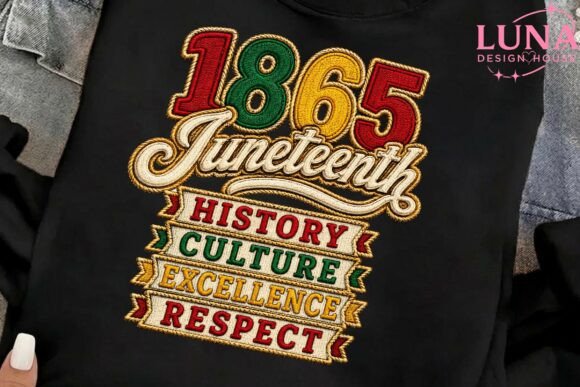
Juneteenth 1865 Embroidery Style PNG
First Impression: Bold, Respectful, and Ready for the Booth
As an embroidery designer who’s prepped over 200 craft fair booths—and shipped thousands of handmade products—I opened Juneteenth 1865 Embroidery Style PNG expecting clarity, intention, and commercial readiness. What I saw was exactly that: a design rooted in dignity and visual strength—not “cute,” not “rustic,” not “minimalist”—but boldly commemorative, with clean linework and balanced negative space. At 4500×5400 px and 300 DPI, it carries the weight of history without visual clutter. That matters on a crowded craft fair table where customers glance for under three seconds.
Where It Shines: Real-World Product Performance
This isn’t just another digital embroidery file—it’s a craft fair product engine. On a natural canvas tote bag? Instant focal point—centered above the pocket or scaled large across the front, it reads clearly from six feet away. On a linen apron? Perfectly balanced between utility and symbolism—neither too loud nor too quiet. For tea towel embroidery? The crisp resolution ensures lettering and fine motifs stay legible even after repeated washes and ironing.
As an embroidered patch? Excellent candidate—its defined outlines and moderate detail translate cleanly to chenille or twill backing. On pillow covers and fabric pouches? It adds heirloom-level intention without overwhelming scale. And yes—it works on caps, but only when placed front-and-center on structured, medium-crown styles (avoid curved bill zones unless you’ve tested stitch pull on scrap).
For Etsy sellers and small shop owners: this design photographs exceptionally well. Its high-res clarity means your printable mockups look professional—no pixelation, no fuzzy edges. That builds trust before the buyer even clicks “add to cart.” As a digital embroidery file, it gives you flexibility: resize confidently for hoop sizes up to 8×12”, and adapt thread colors thoughtfully—deep navy, rich burgundy, or warm gold all elevate its presence on light or mid-tone fabrics.
What Holds It Back (And How to Fix It)
Let’s be real: not every surface welcomes dense stitch areas. On textured towels (like waffle-weave or heavy terry), tiny details may sink or blur—so test first. On dark fabric? Confirm contrast: white or light thread must be vibrant enough to read at arm’s length. Small lettering in the design? It’s legible at full size, but avoid shrinking below 3” wide for finished products—especially patches or cap fronts where clarity = credibility.
Curved surfaces (like mugs or rounded market bags) aren’t ideal for direct embroidery—but as a printable graphic or heat-transfer base? Absolutely. That’s where its Illustrations category shines: versatility beyond needle and thread. Use it as a design asset for sublimation, screen printing, or vinyl cutting—just remember: if you’re selling finished goods commercially, verify licensing terms apply to your production method.
Booth Impact & Buyer Engagement
In person, Juneteenth 1865 Embroidery Style PNG stands out because it feels intentional, not trend-chasing. Customers pause—not just because of the subject, but because the craftsmanship implied is visible: clean lines, thoughtful spacing, and a sense of reverence in execution. That translates directly to perceived value. A $38 embroidered tote bag with this design doesn’t feel like mass-produced decor—it feels like a curated, meaningful handmade product.
It also strengthens brand consistency. If your shop centers around heritage, community, or cultural storytelling, this design anchors your booth narrative. Pair it with complementary neutrals—unbleached cotton, oatmeal linen, charcoal denim—and watch how it elevates your entire display. No neon signs needed. Just one strong, respectful statement piece draws eyes, invites conversation, and supports deeper engagement.
Practical Designer Notes You Can’t Skip
Before cutting fabric or loading hoops:
- Test on scrap fabric—especially if using thick canvas, terry cloth, or stretchy blends.
- Check thread contrast against your base fabric under both daylight and booth lighting.
- Review spacing and stitch density—tight clusters may require cutaway stabilizer; looser sections might need tear-away for clean removal.
- Confirm hoop size compatibility—this design scales well, but always verify your largest intended layout fits comfortably within your machine’s embroidery area.
- Create at least one real mockup—not just a digital preview. See how it drapes, how light hits the stitches, how it feels in hand.
- Compare fabric colors side-by-side—a cream linen vs. ivory cotton yields different warmth and depth.
- Verify commercial licensing before selling finished products—this is a Graphics file, not automatically cleared for unlimited resale.
Final Verdict: A High-Value Design Asset for Purpose-Driven Makers
Juneteenth 1865 Embroidery Style PNG isn’t just timely—it’s timeless in execution. It bridges education and aesthetics, history and hands-on making. For embroidery business owners, it’s batch-friendly: consistent results, scalable layouts, and strong repeat potential across product lines. For Etsy sellers and boutique makers, it’s listing-ready—sharp, meaningful, and visually cohesive. And for craft fair sellers? It’s booth gold: a conversation starter, a quality signal, and a quietly powerful statement that belongs in homes, kitchens, and hearts—not just on shelves.
Use it with care. Honor its roots. And make something beautiful—because that’s how legacy gets stitched, one handmade product at a time.