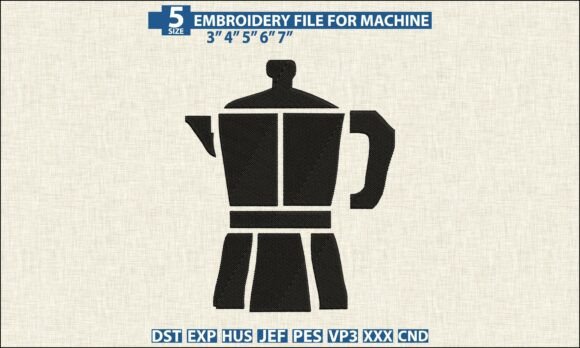
Moka Pot Coffee Embroidery Pattern DST
A Seasonal Designer’s First Impression: Warm, Nostalgic, and Instantly Recognizable
Opening Moka Pot Coffee Embroidery Pattern DST feels like stepping into a sunlit Italian kitchen at dawn—steam rising, rich aroma in the air, quiet ritual unfolding. This isn’t just a machine embroidery design; it’s a mood anchor. The classic stovetop espresso maker is rendered with confident, clean outlines and balanced negative space—neither overly detailed nor cartoonish. It lands firmly in the cozy-nostalgic-artisanal zone: rustic enough for farmhouse kitchen towels, elegant enough for linen pillow covers, and warm enough to feel like a hug in holiday gifting. Unlike trend-driven coffee motifs (think cartoon cups or scripted slogans), this design carries timeless appeal—ideal for seasonal embroidery that must resonate across generations and aesthetics.
Where It Shines in Holiday & Seasonal Product Strategy
As an embroidery designer building limited-edition collections for November–January, I immediately see Moka Pot Coffee Embroidery Pattern DST as a versatile anchor piece. On heavyweight cotton tote bags? A standout for holiday markets—paired with “Brew Joy” or “Espresso Yourself” text, it becomes a curated handmade gift. On waffle-weave kitchen towels? It elevates everyday utility into a premium, giftable item—especially when stitched in deep espresso brown or cream thread on natural linen. For embroidered patches? Perfect for stitching onto denim jackets or holiday aprons—small shop owners can bundle them with matching mugs or beans for instant gift sets.
It also works beautifully in family-matching collections: subtle on baby onesies (scaled down), bolder on adult sweatshirt embroidery, and refined on linen napkins or table runners. On ornaments? Yes—with careful stabilizing and reduced density, it reads clearly at 2.5" diameter. And for Etsy sellers: its strong visual identity means faster recognition in thumbnails, better click-through on “coffee lover gifts,” and higher perceived value than generic floral or script designs. Social media previews pop—especially against marble countertops or wooden trays with real moka pots beside them.
Real-World Considerations for Holiday Production
This isn’t a “drop-and-stitch” file. As a working designer, I treat Moka Pot Coffee Embroidery Pattern DST with thoughtful intention—not assumption. Its traditional silhouette holds up well on curved surfaces like pillow covers and tapered tote bag fronts, but I always test stitch on the *exact* fabric texture I’ll use: thick terry cloth towels demand lighter stitch density and tear-away + cut-away stabilizer combo; dark fabrics require brighter thread colors (gold, cream, or burnt sienna) to maintain contrast and warmth. Metallic thread? Avoid unless the file explicitly supports it—the fine spout and handle details may not digitize cleanly for reflective threads.
Stretchy garments (like ribbed knit sweatshirts) need light fusible stabilizer *under* and soft tear-away *on top* to prevent puckering around the base of the pot. And caps? Not ideal—unless you’re using a small, simplified version. The original composition assumes a flat, stable surface. Also: confirm hoop size before bulk production. If your smallest hoop is 4x4", verify the design fits comfortably—no trimming corners mid-holiday rush.
How It Strengthens Seasonal Appeal & Customer Trust
Holiday shoppers don’t just buy products—they buy feelings, stories, and shared identity. Moka Pot Coffee Embroidery Pattern DST taps directly into the “slow ritual” movement: morning calm, family breakfasts, cozy gatherings. That emotional resonance boosts giftability—customers confidently choose it for teachers, baristas, new homeowners, or grandparents who still brew the old way. It also builds trust: unlike trendy graphics that date quickly, this design signals craftsmanship and intentionality. When paired with quality materials (organic cotton towels, heavyweight canvas totes), it tells buyers, “This wasn’t mass-produced—it was chosen.” That perception lifts average order value and encourages repeat purchases across seasons.
For Etsy sellers and small shop owners, consistency matters. Using Moka Pot Coffee Embroidery Pattern DST across kitchen linens, apparel, and patches creates cohesive branding—especially when paired with a unified color palette (e.g., terracotta, oat, charcoal, cream). That cohesion translates to stronger visual recognition in feeds, email banners, and printable mockups—key assets during high-volume holiday prep.
Practical Designer Notes Before You Stitch
- Test thread colors on both light and dark fabric—cream looks warm on ivory linen but disappears on oat; gold pops on navy but overwhelms ecru.
- Check stitch density—if it’s over 12,000 stitches, reduce density slightly for towels and baby items to ensure softness and durability through repeated washing.
- Confirm hoop size compatibility—don’t assume it fits your 4x4" or 5x7". Measure the design dimensions in your embroidery software first.
- Use proper stabilizer—cut-away for knits, tear-away for stable wovens, heavy-duty for thick terry. Skipping this risks distortion—especially around the pot’s rounded base.
- Create realistic mockups—use actual product photos, not generic templates. A digital embroidery file only sells when customers *see* it in context: on a folded towel, hanging from a hook, or centered on a sweatshirt chest.
- Review small details after stitching—the steam curl and handle curve should read cleanly. If they blur, adjust tension or needle size.
- Plan matching color palettes—coordinate thread with packaging, tags, and social visuals. Consistency = professionalism.
- Confirm commercial licensing—before selling finished seasonal products, verify the digital embroidery file permits commercial embroidery use. This protects your small shop product line and brand integrity.
Final Thought: A Quiet Anchor in a Noisy Season
In a holiday landscape saturated with glitter, slogans, and urgency, Moka Pot Coffee Embroidery Pattern DST offers something rare: grounded warmth. It doesn’t shout—it invites. It doesn’t chase trends—it honors tradition. For embroidery sellers, handmade gift makers, and seasonal product creators, it’s more than a tea-adjacent embroidery file. It’s a reliable, emotionally intelligent tool—one that transforms ordinary items into meaningful, giftable moments. Use it thoughtfully, stitch it intentionally, and let its quiet charm do the rest.